

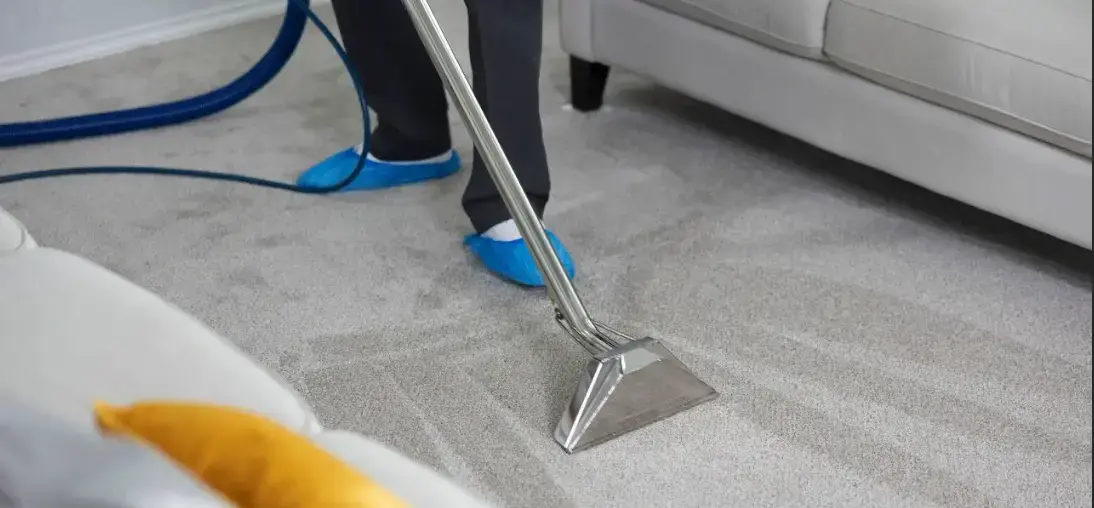
In Vaughan, a room with wet carpet, disturbed storage and stale air can tempt a homeowner to look for one all-purpose rental. That is the wrong comparison. Water extraction, air scrubbing and drying each deal with a different condition, and the useful choice depends on what remains in the room after the first safe cleanup.
Read the recreation room as three separate scenes
Start with the carpet, because it may hold liquid below the surface even after the room looks presentable. Then look at the storage shelf and its contents, because moving them can release dust or expose materials that need a different cleanup decision. Finally, look at the room air, which may feel humid simply because the lower level has been closed while work is happening.
Those scenes overlap, but they should not be blended into a single diagnosis. A damp carpet edge does not establish an air-quality claim. Dust from sorting boxes does not prove that the carpet has finished drying. A closed-room feeling does not tell the reader whether the next task is extraction, airflow, moisture control or a closer inspection.
A practical note can keep the distinction clear: record what was wet, what was moved, and what condition remains uncertain. That note is more valuable than a description of the room as generally damaged, because it gives every later equipment decision a visible target.
For example, a note might separate a damp carpet border from dust created by moving a storage shelf and from a humid feeling after the room has been closed. Those observations may share a room, but they call for different checks. Keeping them separate makes the eventual rental plan easier to explain and less likely to overreach.
Compare the water-removal role against the material holding water
Extraction belongs in the conversation when carpet, backing, an area rug or another absorbent layer still contains liquid. Its purpose is to remove what the material is holding. It is not a promise that a nearby wall, the room air or every concealed layer has been resolved at the same time.
For a category reference, readers can review the Vaughan carpet water extractor rental page. The sensible question is whether the water is actually in carpet or another material the extractor can address, and whether the edge, threshold and nearby finishes can be inspected before the room is put back together.
This distinction matters around a recreation room because the open middle is often the easiest place to see. The more useful check may be a border under furniture, a transition between flooring types, or the point where carpet meets the wall. A comparison that ignores those places is really comparing convenience, not cleanup roles.
If the room still has held water, the first task is not to make it feel fresher. It is to deal with that held water safely and then see what evidence remains. Only after that does it make sense to compare the room-air categories.
Give air scrubbing and drying their own questions
An air scrubber is a filtration category. It can be relevant when cleanup activity leaves particles in the work area, but it does not remove liquid from carpet or identify why water arrived. It should be selected because there is a clear airborne-particle question after material handling, not because its name sounds broad enough to cover the whole room.
Drying equipment has a different role again. Air movement and dehumidification are about the conditions that allow exposed materials and room air to change over time. Their placement, drainage handling and follow-up matter. They should not be judged by how much noise they create or by whether the centre of the room feels better after a short run.
For this Vaughan scenario, the fairest comparison is sequential. First ask whether the carpet still holds water. Next ask whether an exposed surface or the room air needs a drying response. Then ask whether moving contents created a separate filtration issue. The answer may involve one category, two categories in order, or no rental category until the source of water is understood.
That sequence also avoids a common comparison mistake: treating the longest catalogue description as evidence that a category has the broadest job. A room does not benefit from a winner’s podium. It benefits from a clear first task, a safe way to carry it out and a reason to reassess when the material or the air does not behave as expected.
Choose the next step from a repeatable walk-through
Before furniture returns, walk the same route that was checked at the start: the carpet edge, the base of the storage shelf, the closed-room corner and the transition out of the space. Compare those points with the first notes instead of relying on a general sense that the room is back to normal.
If one area remains uncertain, name the uncertainty plainly. It may call for a different equipment role, a change in placement or a professional inspection. That response is more responsible than repeating the category already in the room simply because it is running.
The useful result is a clear sequence: remove water from the material that holds it, manage the remaining room conditions, and keep filtration tied to a real particle concern. That is a comparison a homeowner can apply without turning any one machine into a winner by default.
