

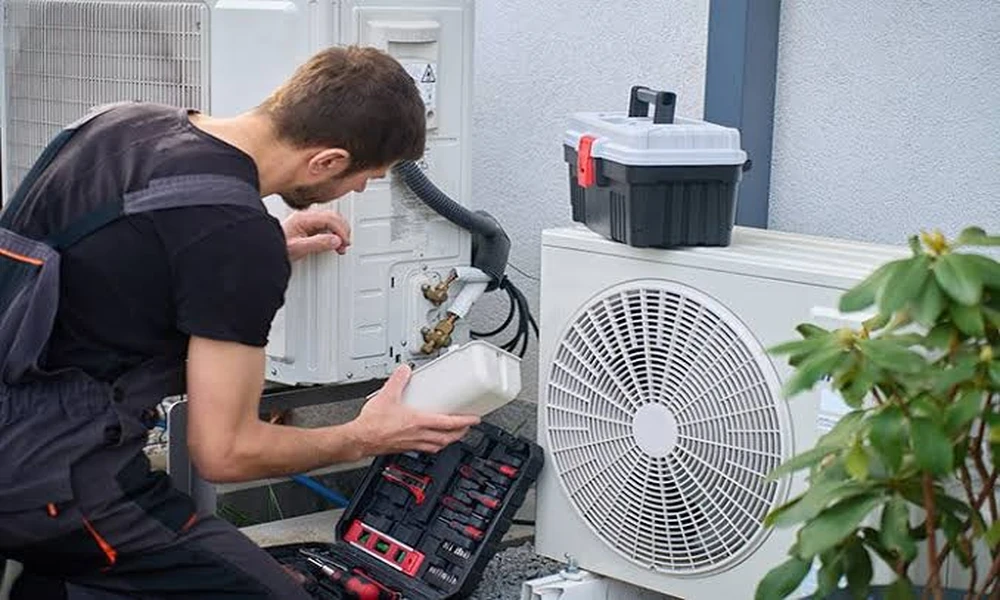
Air conditioners in South Texas rarely fail without warning. They drop hints for weeks, sometimes all season, and most people only notice once the house reaches 85 degrees at midnight. For three generations, the Farrell family has kept homes across the Rio Grande Valley cool, starting with Ed Farrell’s founding of the company in 1979 and continuing today under his grandson Dean. The team at their shop on Professional Drive answers calls around the clock, and the lesson from all that Weslaco air conditioning repair work is the same. Small warnings caught early lead to cheap fixes, and warnings ignored lead to big ones.
The rest of this piece follows a breakdown the way it usually happens, one stage at a time.
The Early Hints Most People Miss
The first signs are easy to explain away. The system runs longer than it used to on an ordinary afternoon. The electric bill goes up even though the thermostat setting hasn’t changed. The house hits the right temperature but still feels a little clammy, because a struggling system cools the air without pulling enough moisture out of it.
Other early clues include:
- A unit that turns on and off every few minutes instead of running full cycles
- One room that never cools as well as the others
- A thin layer of frost on the copper line near the outdoor unit
- Air from the vents that feels cool but not cold
Short cycling in particular deserves attention. It can point to an oversized system, a failing sensor, low refrigerant or a thermostat in a bad spot. Every extra start also wears on the compressor, which is the most expensive part in the system.
When the System Starts Making Noise
The next stage is louder. Repeated clicking that never ends in a start often means a failing capacitor or a worn contactor. A steady buzz from the outdoor unit while the fan sits still is a classic capacitor failure, and it’s also one of the most common summer calls in the Valley. Grinding or squealing usually comes from motor bearings wearing out. A soft hiss near the lines can mean refrigerant is leaking.
Smells tell you things too. A musty odor at startup points to moisture and growth around the indoor coil or in the drain pan. A burning or electrical smell means shut the system off at the thermostat and leave it off until someone looks at it.
Five Minutes of Checking Before You Call
Plenty of “broken” air conditioners turn out to have simple causes. Before scheduling a visit, walk through these checks.
- Make sure the thermostat is set to cool, the setting is below room temperature, and the batteries aren’t dead.
- Check the breaker panel for a tripped breaker on the AC or air handler.
- Pull the air filter. A dark, clogged filter can choke airflow enough to freeze the coil.
- Look at the condensate line near the indoor unit. Many systems have a float switch that cuts power when the drain backs up.
- If you see ice on the lines or the coil, switch the thermostat to off and the fan to on so it can thaw before anyone runs a test.
If none of those explain it, stop there. Resetting a breaker over and over or taking panels off the outdoor unit can turn a small electrical problem into a dangerous one.
What a Thorough Service Visit Looks Like
A good technician measures instead of guessing. Expect them to test the capacitor’s rating against its label, check amp draw on the compressor and fan motor, and look at the contactor for pitted or burned contacts. They should measure the temperature difference between air going into the return and air coming out of the vents. A healthy system usually shows somewhere around 15 to 20 degrees.
Checking refrigerant properly means reading pressures along with superheat or subcooling, not just adding refrigerant and hoping. If a system is low, it’s leaking, and topping it off without finding the leak only puts off the next visit. A good tech will explain what failed, show you the worn part if you ask, and tell you whether it’s a one-time failure or a sign of wider wear.
The Parts That Give Out First in Long Summers
In a climate where the AC may run eight months a year, some parts fail predictably. Capacitors lose strength under constant heat. Contactors wear out from cycling thousands of times. Condenser fan motors run for hours in direct sun. Drain lines clog with algae in humid weather. Indoor coils can develop pinhole leaks over time from a type of corrosion that shows up in older copper coils.
Compressors tend to last longest, but they often fail as a result of the other problems. Low refrigerant, dirty coils and weak capacitors all make the compressor work harder. That’s why a $20 part replaced in April can save a much bigger bill in August.
Fix It or Let It Go?
Eventually every system reaches the point where another repair doesn’t make sense. One common rule of thumb is to multiply the unit’s age by the repair cost. If the result tops about $5,000, replacing the system is usually the better bet. Age is its own signal too. In South Texas heat, many systems are near the end of their useful life somewhere between 12 and 15 years.
Refrigerant plays a bigger part in this decision than it used to. Systems that run on R-22 now depend on a limited supply of reclaimed refrigerant, so any leak gets costly fast. Newer equipment is moving to refrigerants such as R-454B and R-32, and southern states have higher minimum efficiency ratings than the North. A modern system often costs noticeably less to run each month, which helps offset the price over time.
Frequent breakdowns, uneven cooling that duct repairs never fixed, and humidity that stays high even with a new filter all make replacement worth pricing out.
Keeping the Next Breakdown Away
Most of the stages above can be avoided with steady habits. Book a tune-up in early spring, before the long heat starts. Change filters monthly through peak season. Keep grass and shrubs trimmed back from the outdoor unit, and keep supply vents open, since closing them raises pressure in the ducts and strains the blower. A system that gets this kind of care still sends warning signs eventually, but you’ll get more time to act on them.
