

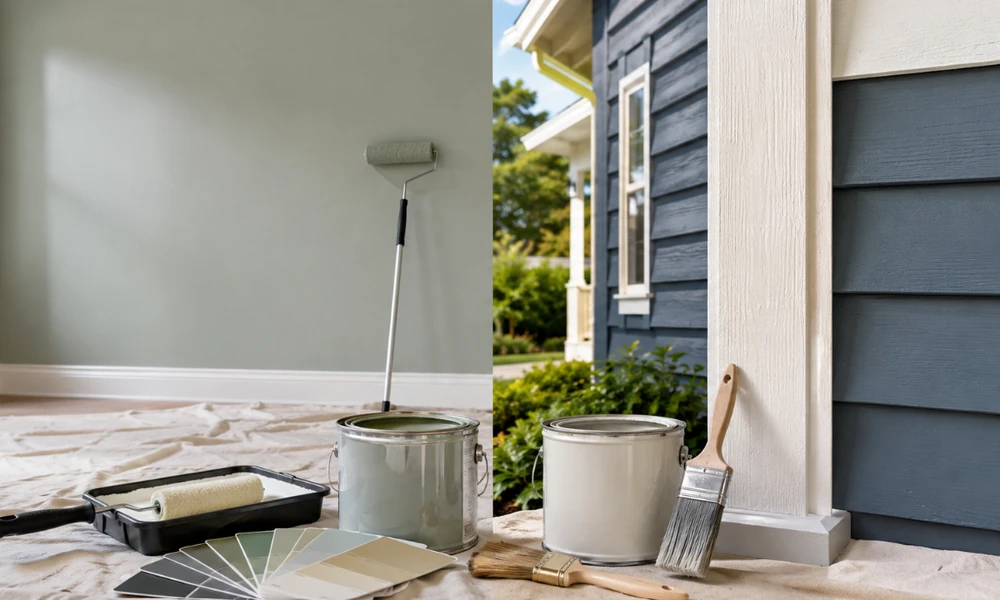
Paint may look simple from the outside. You pick a color, open the can, and start rolling it on. But not all paint is made for the same job. Interior and exterior paint are designed for different surfaces, different conditions, and different levels of wear.
Using the wrong one can lead to peeling, fading, odor problems, or poor coverage. That is why it helps to understand how they are different before starting a project.
Interior paint is made for indoor spaces. It is designed for walls, ceilings, trim, doors, and other surfaces inside the home. Since indoor areas do not deal with direct sunlight, heavy rain, or large temperature changes, interior paint focuses more on appearance, smooth finish, and easy cleaning.
Exterior paint is made for outdoor surfaces. It has to handle sunlight, rain, wind, dirt, humidity, and temperature changes. Because of this, exterior paint is usually more flexible and more resistant to fading, cracking, and moisture.
One of the biggest differences is durability. Exterior paint must expand and contract as weather changes. Heat, cold, and moisture all affect siding, trim, doors, and outdoor surfaces. If the paint is too rigid, it can crack or peel. Exterior formulas are made to move with the surface better than interior paint.
Interior paint does not need that same weather resistance. Instead, it is made to look clean and feel smooth. Many interior paints are designed to resist stains, scuffs, and repeated cleaning. This is especially useful in kitchens, hallways, bathrooms, bedrooms, and living areas.
Another difference is the type of additives used. Exterior paint often contains ingredients that help fight mildew, fading, and moisture damage. These additives help protect outdoor surfaces over time. Interior paint may also include stain-resistant or washable features, but it is not built for constant outdoor exposure.
Odor and indoor air quality also matter. Interior paints are made for enclosed spaces, so many are available in low-odor or low-VOC options. VOCs are chemicals that can release fumes as paint dries. Since interior paint is used inside the home, comfort and air quality are important.
Exterior paint may have stronger ingredients because it needs to survive harsher conditions. That is one reason it should not usually be used indoors. Even if the color looks right, the formula may not be ideal for indoor air or enclosed rooms.
Finish options can also vary. Interior paint often comes in flat, eggshell, satin, semi-gloss, and gloss finishes. Flat paint hides wall imperfections, while satin and semi-gloss are easier to clean. Exterior paint also comes in different finishes, but the choice often depends on the surface and weather exposure.
For example, exterior trim may need a stronger finish than siding. Doors may need paint that resists frequent touch and sunlight. Indoor walls may need a softer look that fits the room’s lighting and design.
Surface preparation is important for both types. Interior walls usually need cleaning, patching, sanding, and sometimes primer. Exterior surfaces often need more prep, including washing, scraping loose paint, repairing cracks, and removing mildew.
Skipping prep can cause problems, even with good paint. Paint needs a clean, dry, stable surface to bond properly.
So, can you use interior paint outside? It is not recommended. Interior paint is not built to handle rain, sun, and outdoor temperature changes. It may fade, peel, or break down faster.
Can you use exterior paint inside? Usually, it is better not to. Exterior paint may contain stronger additives and odors that are not ideal for indoor use.
The best choice is simple. Use interior paint for indoor spaces and exterior paint for outdoor surfaces. Each one is designed for a specific purpose.
Choosing the right paint helps your project last longer, look better, and avoid problems later. A good paint job is not only about color. It is also about using the right product in the right place.
This post was written by a professional at Anawalt Lumber. Anawalt Lumber is a family-owned lumber yard and hardware store serving Los Angeles for over a century. Known for quality lumber, contractor supplies, hardware, and a full-service nursery West La, Anawalt provides personalized service for homeowners and licensed contractors. From job pricing and bulk discounts to special-order materials with fast delivery, Anawalt is your trusted local building supply partner in Malibu, West LA, and Hollywood.
