

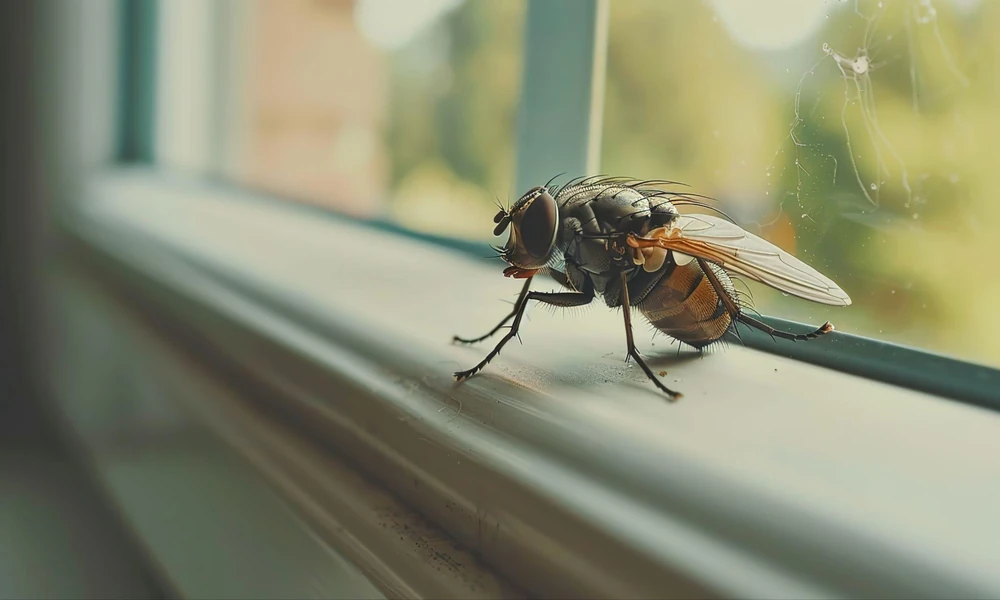
Flies may look similar at a glance, but the species buzzing around a kitchen, bathroom or rubbish area can have very different habits. Each type breeds in its own preferred material, flies at different times and responds differently to treatment. This is why a single approach, such as hanging up fly traps or spraying insecticide, often brings only temporary relief. Identifying the species first makes it easier to target the source and choose methods that actually reduce the population.
House Flies
House flies are among the most common flies in homes, food outlets and around refuse areas. They breed in decaying organic matter and can carry bacteria from waste to food surfaces, so control tends to focus on measures like these:
- Removing breeding sources, such as uncovered rubbish, pet waste and food scraps.
- Keeping bins tightly closed and emptying them regularly.
- Installing window and door screens to stop flies from entering.
- Using ultraviolet light traps or sticky traps in kitchens and food preparation areas.
- Applying baits around outdoor refuse points where flies gather.
Fruit Flies
Fruit flies are drawn to ripe or fermenting produce, spilled drinks and food residue. Because they breed quickly in small amounts of moist, sugary material, control usually involves steps such as these:
- Storing ripe fruit in the fridge or in sealed containers.
- Cleaning up spills of juice, wine, beer or soft drinks promptly.
- Rinsing recycling containers before storing them.
- Checking sink drains and mops for food residue.
- Setting vinegar-based or bait traps near the problem area to reduce adult numbers.
Phorid Flies
Phorid flies are small, humpbacked flies that tend to run across surfaces rather than fly away. They often breed in hidden, decaying material, such as broken sewer pipes or food trapped under floors and equipment. Since the source can be difficult to find, a pest exterminator may need to inspect the premises, and control typically includes approaches such as these:
- Tracing the breeding site, sometimes by placing sticky traps in different areas to see where numbers are highest.
- Repairing damaged pipes or drains beneath floors.
- Removing rotting material from wall voids, crawl spaces or under kitchen equipment.
- Treating the source area rather than spraying adult flies alone.
Drain Flies
Drain flies, also called moth flies, are small and fuzzy and often rest on bathroom walls. They breed in the gelatinous film that builds up inside drains and pipes, so treatment needs to reach that film directly, using methods like these:
- Scrubbing drains with a stiff brush to remove organic build-up.
- Using enzyme-based drain cleaners rather than relying only on bleach.
- Repairing leaks and standing water around sinks, floor traps and air-conditioner trays.
- Running water through rarely used drains to keep them clear.
Telling the Species Apart
Accurate identification is the first step towards choosing the right control method. The comparison below summarises some of the visible differences:
| Species | Size and Appearance | Where They Are Usually Seen | Typical Flight Behaviour |
| House fly | Medium, grey with dark stripes on the back | Kitchens, refuse areas, outdoor dining spaces | Fast, erratic flight around food |
| Fruit fly | Very small, tan body with red eyes | Fruit bowls, bars, recycling bins | Slow hovering near produce |
| Phorid fly | Small, with a humped back | Floors, drains, near hidden moisture | Prefers running over flying |
| Drain fly | Small, fuzzy and moth-like | Bathroom walls, sinks, floor drains | Short, weak hops |
Matching the Method to the Fly
Different fly species need different responses, from sealing bins for house flies to cleaning drain film for drain flies and tracing hidden breeding sites for phorid flies. Identifying the species, removing its breeding source and using traps as a supporting measure can help keep fly problems under control. For persistent infestations, professional help can locate sources that are not easy to find.
Not sure which flies keep coming back? Book an inspection with Rentokil today.
