

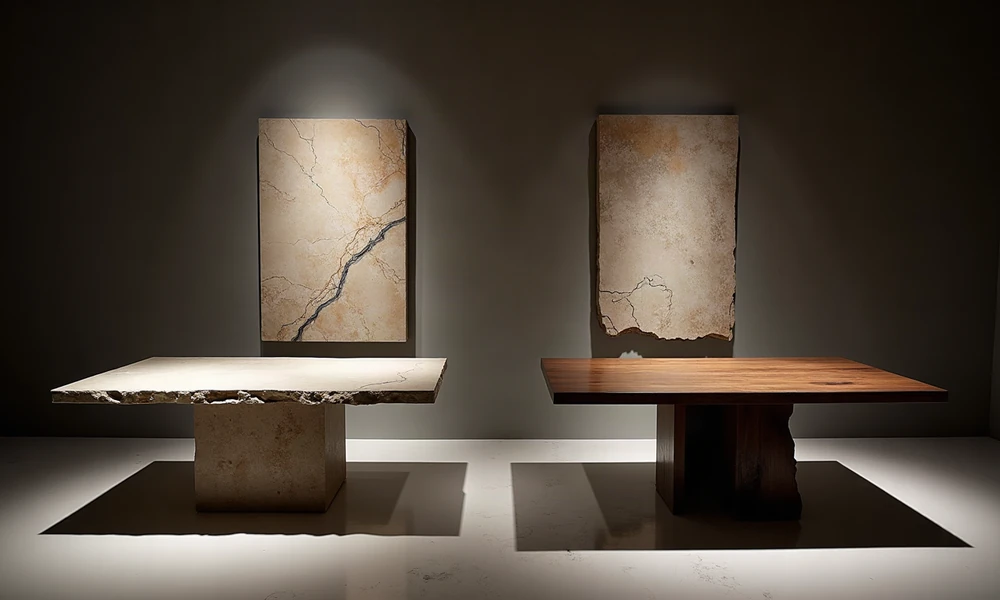
Before choosing a tabletop material, it helps to be honest about how the table will actually be used day to day, since a household that eats hot pot weekly has very different needs from one that mostly uses the table for laptops and light meals. Sintered stone and solid wood are the two materials most buyers weigh against each other when browsing a rectangular dining table in Singapore, and the right choice depends less on which looks better under showroom lighting and more on which trade-offs a household is actually willing to live with over years of ownership rather than the first few months.
1. Heat Resistance for Everyday Cooking Habits
Sintered stone tolerates direct heat from hot pots, trivets, or serving dishes straight off the stove considerably better than solid wood, which can scorch or develop a permanent mark if exposed to sustained heat without protection. Households that regularly serve steamboat or freshly cooked dishes directly at the table tend to find sintered stone the more forgiving surface for this specific habit, while solid wood generally requires more consistent use of trivets or heat mats to avoid gradual surface damage over years of use. This distinction matters most for families with a genuine weekly or biweekly hot pot habit, since the cumulative effect of repeated heat exposure on wood tends to show up gradually rather than as one obvious incident, making it easy to underestimate until the damage has already accumulated.
2. Scratch and Stain Behaviour Over Time
Solid wood develops a natural patina over years of use, and light scratches often blend into this patina rather than standing out sharply, giving an aged wood table a lived-in character many owners find appealing rather than problematic. Sintered stone resists scratching far more effectively in the short term, but a scratch or chip that does occur tends to be more visually obvious against its uniform surface, and unlike wood, it typically cannot be sanded or refinished to remove the mark. Households with young children who tend to drag toys or cutlery across a tabletop should weigh this difference carefully, since the two materials essentially trade a higher chance of minor damage for a more forgiving recovery, or a lower chance of damage for a less forgiving one if it does occur.
3. Long-Term Maintenance Expectations
Solid wood tables generally benefit from periodic conditioning or refinishing over their lifespan to maintain both appearance and surface protection, representing an ongoing maintenance commitment some households are happy to take on and others prefer to avoid entirely. Sintered stone requires comparatively little maintenance beyond regular cleaning, making it a more straightforward option for households wanting a rectangular dining table in Singapore that looks the same with minimal upkeep years after purchase, without the periodic care wood surfaces typically expect. Buyers who enjoy the process of maintaining wood furniture, treating it almost as part of caring for the piece, may find this ongoing involvement rewarding rather than burdensome, while others simply want a surface that requires no thought beyond a regular wipe-down.
4. Weight and Handling During Moves or Rearrangement
Sintered stone tabletops are considerably heavier than an equivalent solid wood table, which affects both delivery logistics and how easily a table can be repositioned within a home later. Households anticipating occasional rearrangement, whether for cleaning, hosting larger gatherings, or simply refreshing a room’s layout periodically, may find solid wood’s comparative lightness a meaningful practical advantage that isn’t always obvious when comparing two tables side by side on a showroom floor. This weight difference also affects flooring considerations in some homes, since a heavier stone table places more concentrated pressure on floor protectors or certain flooring types over time.
Weighing the Two Materials
| Consideration | Sintered Stone | Solid Wood |
| Heat resistance | Tolerates direct heat well | Requires trivets for hot cookware |
| Scratch appearance | Resists scratching, but marks stand out if they occur | Scratches often blend into natural patina |
| Ongoing maintenance | Minimal upkeep required | Periodic conditioning or refinishing recommended |
| Weight and mobility | Heavier, harder to reposition | Lighter, easier to move or rearrange |
Bringing the Right Questions Into the Showroom
Neither material is objectively superior, since the right choice depends entirely on a household’s actual cooking habits, tolerance for visible wear, and appetite for ongoing maintenance. Walking into a furniture showroom in Singapore already knowing which of these four factors matters most to your household makes the in-person comparison considerably more useful than judging the two materials on appearance alone, since a sample swatch under showroom lighting rarely reveals how a material will actually hold up against your specific daily routine.
Contact Casa Concetto to see sintered stone and solid wood dining tables in person and discuss which material suits your household’s daily habits.
