

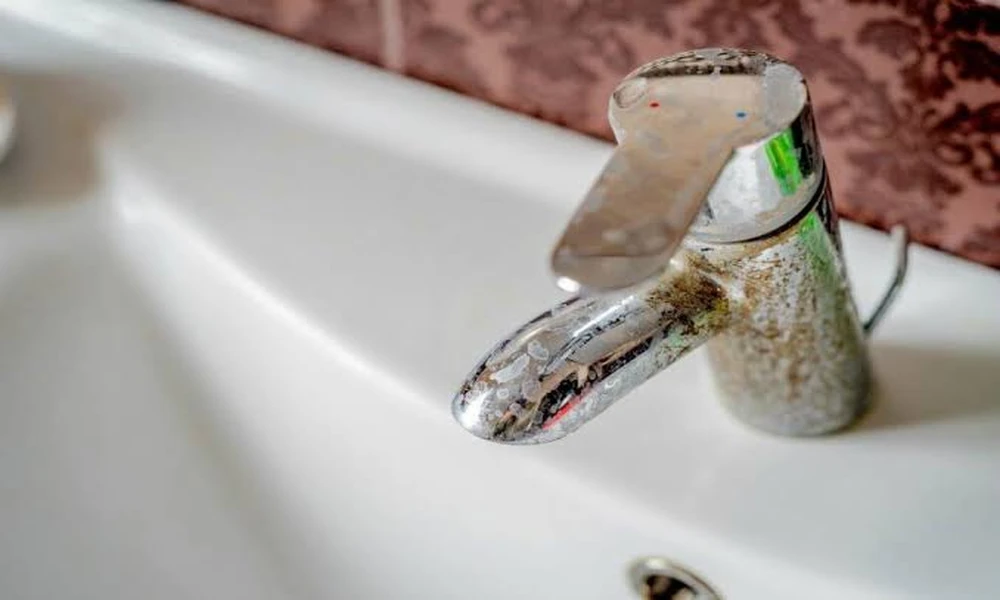
Run a fingertip across the showerhead in many Monterey Bay homes and it comes away chalky. That white film looks like a cleaning chore. It also shows what is happening inside the walls, the water heater and every valve the water passes through. The minerals that dull a glass shower door are building up, layer by layer, on parts of the house nobody ever sees.
Local plumbers spend much of the year dealing with the results. Escobar Custom Plumbing is a family-run shop based in Royal Oaks that takes on hard water problems in Salinas, Watsonville, Santa Cruz and nearby towns. When scale has already caused damage, the work often combines water treatment with repiping or a new water heater. What they see in the field matches the numbers. Mineral-heavy water rarely breaks a plumbing system all at once. It wears it down a little every day.
The Rock Dissolved in Every Glass
Hardness is calcium and magnesium dissolved into groundwater as it moves through soil and stone. Much of this region drinks groundwater. The Salinas system run by California Water Service draws from 25 wells. Its water quality report puts average hardness at 254 parts per million, with readings ranging from 105 to 574. By the report’s own scale, anything from 150 to 300 counts as hard, and the top of that range goes far past it.
Water treatment equipment is usually rated in grains per gallon instead, and 254 ppm works out to about 15 grains. In household terms, a family using 300 gallons a day sends roughly two-thirds of a pound of dissolved mineral through its pipes every day, or more than 200 pounds a year. Most of it goes down the drain. The share that stays behind is what causes the trouble.
Heat turns that dissolved mineral into solid scale. Calcium carbonate dissolves less easily as water warms, so it comes out of solution fastest in the hottest parts of the system. That is why the first serious symptoms almost always show up wherever water gets heated.
Tracing the Damage From Meter to Tap
Inside the supply lines
Cold water lines collect scale slowly, but over decades that still adds up. Galvanized steel is the worst case, because its rough, corroding inner wall gives minerals something to grip. Many homes built before the 1970s still have sections of it. The usual sign is pressure that fades at one fixture after another until the whole house feels weak. Copper holds up better. PEX resists buildup well, though the brass fittings that join PEX runs can still narrow over time.
Inside the water heater
This is where hard water does its most expensive damage. In a tank heater, minerals settle to the bottom as sediment. On a gas model, that layer sits between the burner and the water, so more heat goes up the flue and less reaches the shower. The popping or rumbling some heaters make while they run is steam pushing up through that crust. Electric heaters fail differently. Scale coats the lower heating element until it overheats and burns out.
Tankless units are even less forgiving. Their heat exchangers use narrow passages, and a thin coat of scale can cut flow, trigger error codes and shorten the unit’s life. Manufacturers generally call for periodic descaling, which usually means pumping a mild acid solution through the exchanger. Some also exclude scale damage from warranty coverage once hardness passes a set limit. Anyone putting a tankless heater on hard water should read that part of the warranty before installation day.
Inside fixtures and valves
Aerators and showerheads clog first. That is why low flow at a single faucet so often turns out to be a cheap screen packed with grit. Further in, faucet cartridges stiffen, toilet fill valves stick and run, and shower valves lose their smooth temperature control.
Inside appliances
Dishwashers, washing machines, ice makers and coffee makers all heat or hold water, so each collects its own crust. Heating elements in dishwashers take the worst of it, and a cloudy film on clean dishes is often the first warning.
When Buildup Stops Being Cosmetic
Spots on glass are a nuisance. The signs below suggest scale is now affecting how the system works:
- Hot water runs out sooner than it used to, even with the same household routine
- The water heater pops, crackles or rumbles while it heats
- Low pressure spreads from one fixture to several
- A toilet refills by itself every so often because the fill valve no longer seals
- Laundry comes out stiff and dull even with plenty of detergent
Any one of these alone may have another cause. Several at once in a home on hard water usually point back to scale.
Choosing the Right Kind of Treatment
A traditional softener uses ion exchange. Water passes through resin beads that trade calcium and magnesium for sodium or potassium, and the resin is recharged with brine on a schedule. It is the most thorough fix, and it ends spotting, scale and stiff laundry together. The trade-offs are the salt itself, a small increase in sodium in the water, and a brine discharge some California communities restrict because salty wastewater is harder to recycle. Homeowners in those areas can use potassium chloride, or switch to an exchange-tank service where the resin is regenerated off site.
Salt-free conditioners, often sold as template-assisted crystallization, take another approach. They turn hardness minerals into tiny crystals that stay suspended in the water instead of sticking to surfaces. They need no salt and produce no wastewater, and they can reduce scale in pipes and heaters. The minerals are still in the water, though, so spotting on glass and fixtures continues.
Filtration solves different problems. A whole-house carbon filter improves taste and removes chlorine or chloramine, but it does not soften anything. An under-sink reverse osmosis system strips minerals from drinking and cooking water. It lasts longer when a softener upstream protects its membrane.
Sizing matters more than most buyers expect. At around 15 grains, a family of four using about 75 gallons per person each day produces roughly 4,500 grains of hardness daily. A 32,000-grain softener at that load would regenerate about once a week, which is reasonable. A smaller unit would regenerate constantly and waste salt and water. Testing the water first, with a kit or the utility’s annual report, keeps the purchase accurate.
Small Routines That Buy Years
Flushing a tank water heater once a year, or more often on very hard water, clears loose sediment before it hardens. Checking the anode rod every few years protects the tank lining from corrosion. Setting the thermostat near 120 degrees slows scale formation and lowers the risk of scalding. Soaking aerators and showerheads in white vinegar overnight restores flow for almost nothing. Descaling a tankless unit on the schedule in its manual is the single best way to protect that investment.
None of these habits change the water itself. They only slow its effects, which is why they work best alongside treatment rather than instead of it.
Knowing When Repair Turns Into Replacement
Eventually patching costs more than it saves. Galvanized lines narrowed by decades of buildup rarely come back to full flow, and repiping with copper or PEX ends the slow decline for good. A water heater that is close to the end of its rated life and already rumbling is usually a better candidate for replacement than for another round of flushing.
The order of the work matters. Installing a new heater or new pipes without treating the water first starts the same process over again on clean surfaces. Treating the water first, then replacing whatever scale has already ruined, lets new equipment start clean and last as long as it was designed to.
